Tile contractor licensing and permits in Florida: what to check first
By Hannah Moreau · Updated 2026-07-04
This is general information, not legal advice. Licensing and permit requirements can vary by municipality and change over time, so confirm current requirements with the relevant Florida licensing board or your local building department.
Licensing and permits aren’t the most exciting part of hiring a tile contractor, but skipping this check is one of the more common regrets homeowners report after a job goes sideways. Here’s what to actually verify before signing anything.
What licensing covers, and what it doesn’t
Not every tile job requires the same level of licensing. Straightforward tile setting is sometimes covered under local registration rather than a full state contractor license, while any job that touches plumbing (moving a shower drain, for example), structural elements, or falls under a broader remodel typically needs a licensed general or specialty contractor. The line isn’t always obvious from the homeowner’s side, which is exactly why it’s worth asking directly rather than assuming.
A contractor who’s upfront about what license covers their scope of work, and who can produce a license number without hesitation, is generally a good sign. Reluctance to answer a direct question about licensing is worth treating as a red flag.
How to actually verify a license
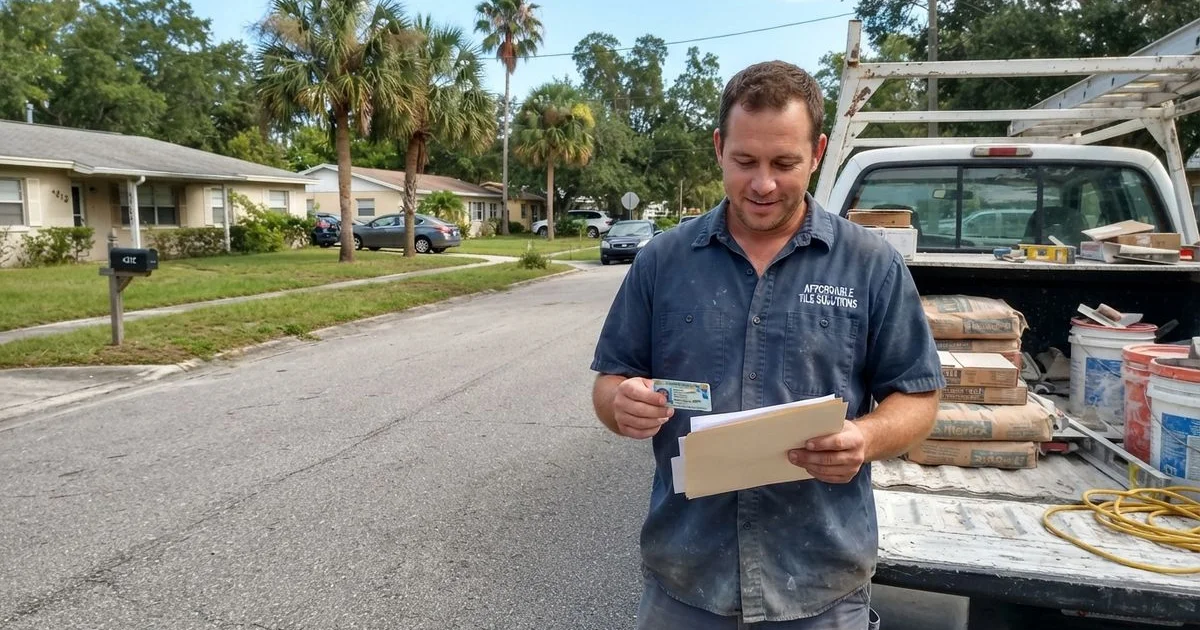
Florida’s Department of Business and Professional Regulation runs a public license search. Before hiring, ask for the contractor’s license number and look it up yourself rather than relying on what’s printed on a truck or a business card. The lookup shows whether a license is active, and whether there’s any disciplinary history worth asking about directly.
It’s also worth confirming general liability insurance and, if the contractor has employees, workers’ compensation coverage. If a worker is injured on your property and the contractor isn’t properly insured, homeowners can end up more exposed than they’d expect.

When a permit is required
Permit requirements depend on the specific scope of work and the municipality, but a few situations commonly trigger one in Florida:
| Type of work | Permit typically needed? |
|---|---|
| Cosmetic tile-over-tile refresh | Often not |
| New shower pan or plumbing relocation | Usually yes |
| Structural changes (removing a wall, altering framing) | Yes |
| Whole-bathroom gut renovation | Often yes |
If a contractor tells you a job “doesn’t need a permit” for something that clearly involves plumbing or structural changes, get a second opinion from your local building department before proceeding. It only takes a phone call, and it protects you if the work is ever scrutinized during a future sale or insurance claim.
Subcontractors and who’s actually licensed
Larger remodeling companies sometimes subcontract the actual tile setting to a separate crew while the general contractor holds the primary license. There’s nothing wrong with this arrangement, but it’s worth knowing who’s doing the physical work and confirming that any subcontractor involved is also properly licensed and insured for their portion of the job. If a dispute over the work comes up later, knowing which entity was actually responsible for the tile work matters for figuring out where to direct a complaint or a claim.
Why this matters beyond the paperwork
Permitted work gets inspected at key stages, which is a real check on quality beyond whatever the contractor tells you. It also creates a paper trail that matters at resale: unpermitted structural or plumbing work sometimes has to be disclosed, and a buyer’s inspector may flag it, which can complicate or delay a closing.
Several tile contractors serving Tampa list permit experience directly in their reviews and project history, since navigating city permitting is a real point of differentiation, not just paperwork. Asking about it upfront is a reasonable, ordinary part of vetting anyone for a job that touches plumbing or structure.
For more on how businesses on this site are scored, see our methodology. Visit the homepage to browse contractors across every category we track.
FAQ
- Does a tile installer need a state license in Florida?
- Tile setting itself often falls under a specialty or local registration rather than a state-level license, though contractors who also handle plumbing changes, structural work, or broader remodeling typically need a state contractor license. Requirements vary by scope of work, so ask specifically what license covers the job you're hiring for.
- How can I verify a contractor's license?
- Florida's Department of Business and Professional Regulation maintains a public license lookup where you can confirm a license is active and see any disciplinary history. Ask for the license number directly and check it yourself rather than taking a business card at face value.
- Do I need a permit for a bathroom retile?
- It depends on the scope. A straightforward tile-over-tile refresh often doesn't require one, but work involving plumbing changes, a new shower pan, or structural alterations usually does. Local building departments vary, so confirm with your specific municipality or ask your contractor to pull the permit as part of the job.
- What happens if a job is done without a required permit?
- Unpermitted work can create problems at resale, since it may need to be disclosed or brought up to code before a sale closes. It can also affect insurance claims if damage later occurs in an area that should have been permitted and inspected.