Preventing mold and mildew behind shower tile in Tampa
By Hannah Moreau · Updated 2026-07-10
This is general information, not medical advice. If you have health concerns related to mold exposure, talk to a healthcare provider.
Tampa’s humidity gives mold more opportunity than a drier climate would, and a shower is already the most moisture-prone room in the house. Most of the time, mold behind tile traces back to a specific, preventable cause rather than bad luck.
What actually causes it
- Missing or failed waterproofing. The membrane behind shower tile is what’s supposed to stop water from reaching the wall studs and backer board. If it was skipped during installation, or has failed over years, moisture gets behind the tile every time the shower runs.
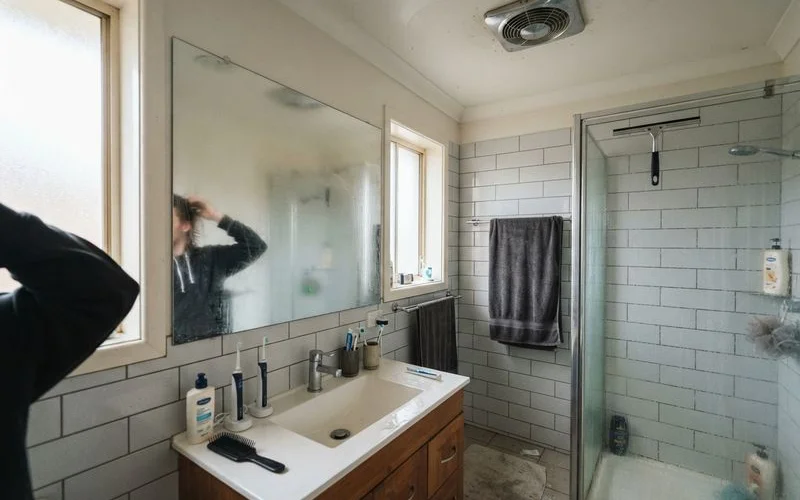
- Poor ventilation. A bathroom fan that’s undersized, rarely used, or vented incorrectly (into an attic rather than outside, for example) leaves humid air to settle into grout and drywall instead of clearing out.
- Grout that hasn’t been sealed or maintained. Grout is porous. Without sealing, it absorbs moisture more readily, and cracked or missing grout gives water a more direct path toward the wall behind it.
- A shower that doesn’t fully dry between uses. Frequent, back-to-back showers in a household with poor ventilation give less time for the space to dry out, increasing the moisture load over time.
Signs worth paying attention to
A persistent musty smell that cleaning doesn’t resolve, grout that looks discolored or feels soft, or tile that’s slightly loose near the base of the shower are all worth having checked. None of these guarantee a mold problem, but they’re the kind of early signs that are much cheaper to address before they become a full wall repair.
Prevention habits that actually work
| Habit | Why it helps |
|---|---|
| Run the bathroom fan during and after showers | Clears humid air before it settles into grout and drywall |
| Squeegee shower walls after use | Reduces standing moisture on tile and in grout lines |
| Reseal grout roughly once a year | Keeps grout from absorbing moisture as readily |
| Fix cracked grout or caulk promptly | Closes off a direct path for water to reach the wall |
| Leave the shower door or curtain open slightly | Lets air circulate and the space dry faster |
None of these individually solves a serious mold problem if the waterproofing failed at installation, but together they meaningfully reduce the odds of ever getting there in a properly built shower.
Mold on grout versus mold behind the wall
It helps to separate two different problems that get lumped together. Surface mildew on grout, the dark speckling that shows up in shower corners, is common, mostly cosmetic, and responds well to regular cleaning and a grout sealer. Mold growing behind the tile, in the wall cavity itself, is a different and more serious issue tied to a waterproofing failure, and no amount of surface cleaning reaches it. If cleaning the visible grout doesn’t resolve a musty smell, that’s a sign the problem may be behind the tile rather than on top of it.
When it’s worth calling a professional
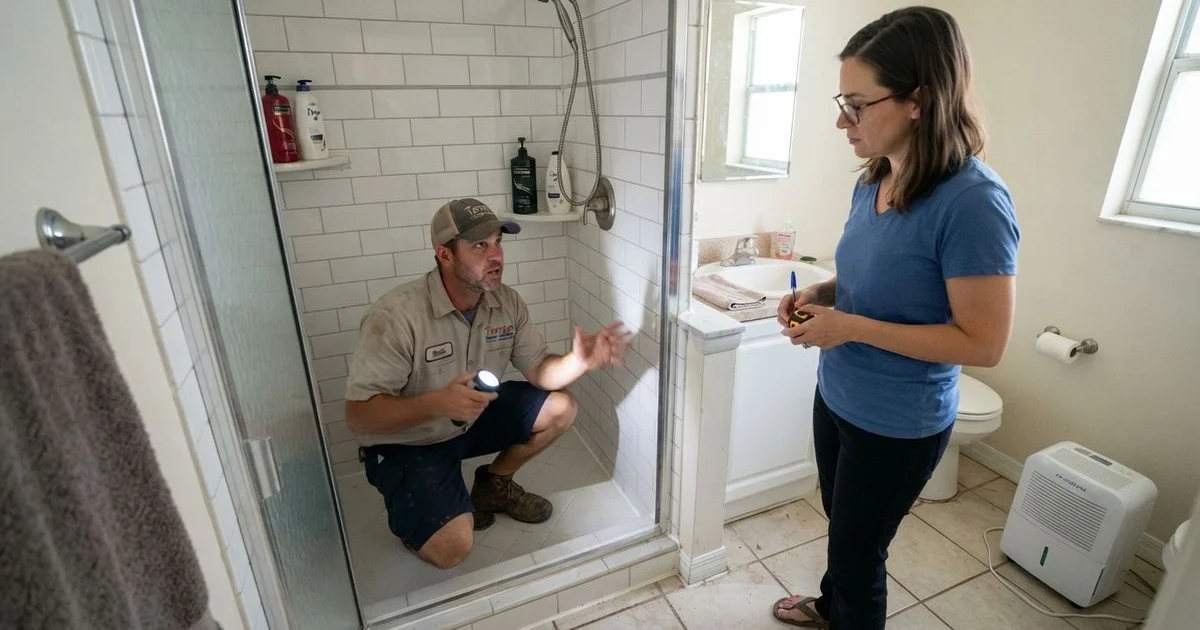
If you suspect mold behind the tile itself, rather than just surface mildew on grout, that’s a different problem than a cleaning routine can fix. A contractor experienced in waterproofing repair can assess whether the membrane has failed and whether the affected wall section needs to be opened up and redone. Trying to reseal over an active moisture problem behind the tile typically just delays a bigger repair rather than solving it. If a section does need to be reopened, that work is usually priced and scoped like a full shower retile rather than a simple patch.
When comparing bathroom and shower tile specialists in Tampa, ask specifically about their waterproofing system and warranty on that portion of the work, since it’s the part of the job you won’t be able to see or check yourself once the tile goes up.
For more on how contractors are scored on this site, see our methodology. Visit the homepage to browse every tile category we cover.
FAQ
- Is mold behind shower tile always a sign of bad installation?
- Not always, but it's a common cause. A missing or failed waterproofing membrane lets water reach the wall studs and backer board, creating conditions for mold. Poor bathroom ventilation and grout that hasn't been maintained also contribute, independent of how the tile was originally installed.
- How do I know if there's mold behind my shower tile without tearing it out?
- A musty smell that doesn't go away with cleaning, soft or discolored grout, or tile that feels slightly loose are all signs worth having checked. A contractor can sometimes test moisture levels behind the tile without full demolition, though confirming mold definitively often does require opening up a section of wall.
- Does running the bathroom fan actually make a difference?
- Yes, meaningfully. Running the fan during and for a while after a shower clears humid air before it settles into grout and drywall. It's one of the simplest, lowest-cost habits for preventing moisture buildup over time.
- Can mold behind tile make me sick?
- Some people are sensitive to mold exposure and can experience respiratory irritation or allergy-like symptoms. If you suspect a significant mold problem, especially with ongoing symptoms, it's worth having it properly assessed rather than just resealing over it.
Related on this site
- Browse bathroom & shower tile providers
- Best bathroom & shower tile in Tampa Fl →
- What a bathroom or shower retile costs in Tampa
- Aging-in-place bathroom tile remodels: what to plan for
- Signs your grout needs repair, and what fixing it costs
- Is tile-cutting dust dangerous? Safety basics for your project
- All guides →