Is tile-cutting dust dangerous? Safety basics for your project
By Hannah Moreau · Updated 2026-07-12
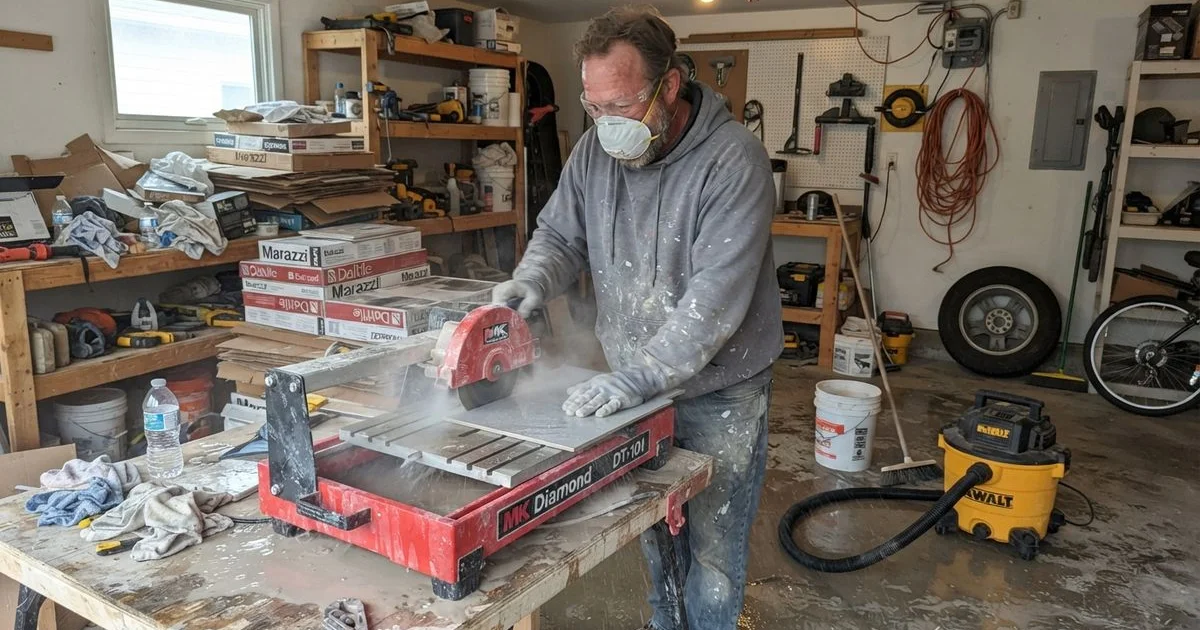
This is general information, not medical advice. If you have respiratory concerns or occupational exposure questions, talk to a healthcare provider or occupational safety professional.
Cutting tile, especially porcelain and natural stone, produces fine dust that contains crystalline silica. It’s a real consideration for any tile project, though the risk level depends heavily on how the work is done and for how long.
What’s actually in the dust
Most tile materials (ceramic, porcelain, natural stone) contain silica, and cutting them mechanically releases fine particles small enough to stay airborne and be inhaled. This is a well-documented occupational health concern for people who cut tile daily as a job. For a homeowner having one room tiled, the exposure window is much shorter, but the same basic precautions still reduce unnecessary risk.
Wet cutting versus dry cutting
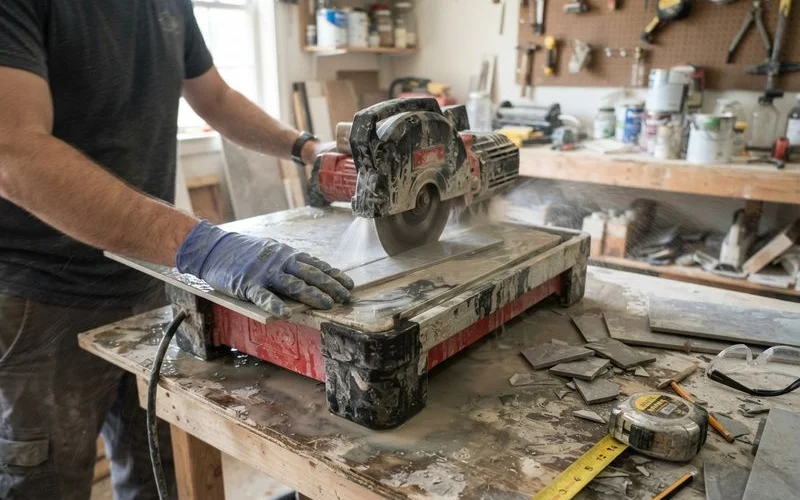
The single biggest factor in how much dust a cutting job produces is whether it’s done wet or dry. A wet saw runs a stream of water across the blade during the cut, which suppresses the vast majority of airborne dust at the source. A dry saw or angle grinder without water or dust extraction produces significantly more airborne particulate, since nothing is settling the dust before it becomes airborne.
Most professional tile contractors use wet saws as standard practice, partly for dust control and partly because it also produces a cleaner cut. If you’re doing any cutting yourself, a wet saw is worth the investment or a tool rental over a dry alternative.
What to ask a contractor about dust control
| Question | Why it matters |
|---|---|
| Do you use a wet saw for cuts? | Wet cutting suppresses most airborne dust at the source |
| Is the work area sealed off from the rest of the home? | Contains dust to the room being worked on |
| Do you use dust extraction on any dry-cut tools? | Reduces exposure for tools that can’t use water |
| How do you handle daily cleanup? | Prevents dust from settling into HVAC systems and other rooms |
A contractor who has clear, practiced answers to these questions is generally handling dust as a routine part of the job rather than an afterthought.
Precautions worth taking as a homeowner
Sealing off HVAC vents in the work area during a job, keeping the room’s door closed as much as possible, and running an air purifier in adjacent living spaces are all reasonable, low-effort steps. If anyone in the household has asthma, allergies, or another respiratory sensitivity, it’s worth mentioning to the contractor directly so they can adjust dust containment accordingly, and considering staying elsewhere during the most dust-intensive cutting days if the job is large.
Cutting tile outdoors versus indoors
Where the cutting happens matters as much as the tool. Setting up a wet saw outdoors, on a driveway or in a garage with the door open, keeps the bulk of dust and slurry outside the living space entirely, which is the simplest way to reduce indoor exposure for a project involving significant cutting. Some jobs require cuts to happen indoors for practical reasons, close to where the tile is being set, but a contractor willing to do outdoor cutting for the bulk of the work and bring in pre-cut pieces is worth asking about, especially for a larger installation with a lot of cuts. The same dust-control habits matter for repair work too, like grinding out old grout, covered in our guide on signs your grout needs repair, and what fixing it costs.
The bottom line
For a typical residential tile job with a contractor using standard wet-cutting practices and basic containment, dust exposure is a manageable, short-term consideration rather than an ongoing hazard. The bigger risk shows up with DIY dry-cutting in an unventilated space over an extended project, which is worth factoring in if you’re weighing doing the cutting yourself.
For details on how contractors on this site are evaluated, see our methodology. Visit the homepage to browse tile contractors across every category we track.
FAQ
- Is tile dust actually dangerous, or just messy?
- Both. Cutting tile, especially porcelain and natural stone, releases fine silica dust. Occasional, well-ventilated exposure during a home project is a different risk level than daily occupational exposure, but it's still worth controlling rather than ignoring.
- What should I ask a contractor about dust control?
- Ask whether they use a wet saw (which suppresses most dust at the cut) versus a dry saw, whether they use dust extraction on tools, and how they contain and clean up dust in occupied living spaces, not just the immediate work area.
- Should I leave the house during a tile installation?
- Not usually necessary for a typical residential job with reasonable dust controls in place, though closing off the work area and running air filtration in the rest of the home is a reasonable precaution, especially for anyone with respiratory sensitivities.
- Is DIY tile cutting riskier than hiring a pro for dust exposure?
- It can be, mainly because DIYers are less likely to have wet-cutting equipment or dust extraction tools on hand. A hand-held dry saw in an unventilated space produces more airborne dust than a contractor's properly set up wet saw.